Adobe has confirmed that after 2020, they'll no longer give support on Adobe Flash Player and associated problems, so even if you have no idea on if to uninstall Adobe Flash Player on your Mac or not, it's suggested to embrace new technologies. Verify that Flash player is installed to your computer. If you are not sure if your Mac contains Adobe Flash Player, or whether other browsers contain the Flash Player plug-in, you can visit Adobe's website where it can check your browser.
- How To Uninstall Adobe Flash Player
- How To Uninstall Adobe Flash Player 30 Npapi
- How To Uninstall Adobe On Mac
- Adobe Flash Player
- How To Uninstall Flash
In a previous article I outlined how the use of Adobe Flash can increase the opportunities for malicious hackers to compromise your computer.
There are several ways to protect yourself from these types of attacks – enabling Click to Play, for instance, is one of them – ensuring that Flash-based elements only load in your browser on your command.
That’s not all you can do, though.
Let’s start with the first scenario: that you don’t want to completely eradicate Adobe Flash from your computer.
In order to achieve this, you’re going to have to think about your updates. They may be the bane of your digital life, but software updates are crucial to staying afloat online, whatever operating system is installed.
First, let’s take a look at how you can check whether you’re running the latest – and safest – version of Flash.
Checking your Flash version
If you’re unsure about what version of Flash you’re running, or whether you’ve got Flash installed at all, head on over to the Adobe help page.
Click the yellow “Check Now button” and wait a few seconds.
If you’re running the latest version of Flash, you’ll be presented with a brief confirmation. Otherwise, you’ll be provided with an alert instructing you to directly download the latest version.
Updating Flash
Google made technology headlines after announcing that the Chrome web browser would contain an automatically updating build of Flash Player. Back in 2010, Paul Betlem (Senior Director of Flash Engineering) attributed this move to creating a “safe experience” for everyone.
If you’re not a Chrome user, or are just wondering how you can stay on top of your Flash updates, keep reading.
The first – and most straightforward – way to ensure you’ve got the latest version of Flash installed: visit the Flash Player download page and install the latest version.
A quick side note: make sure to untick any “special offers” or added extras that might appear!
Otherwise, you can look behind the scenes to the Flash Player Settings. The easiest way to invoke the Settings screen is to right-click on an element of Flash content on a website.
From the context menu that appears, choose “Global Settings.” You should now see the “Flash Player Settings Manager” on your screen. Look for the “Advanced” tab to check your update preferences or force another check for the latest version.
If it’s not already, I’d recommend setting your update preference to “allow Adobe to install updates” on an automatic basis, where any urgent security patches are installed without user intervention. Adobe aims to notify you before installing any non-emergency updates, however.
Allowing Flash to “notify me to install updates” is the only acceptable alternative, where the Flash plugin checks for new versions on a regular basis, prompting you to install any patches. This applies to all types of update, regardless of urgency.
Opting to “never check for updates” means that you’ll only be able to find the latest version of Flash from the Adobe website. Here, you won’t be notified of any vulnerabilities, or the critical updates which patch them.
Removing Flash
Although you can disable Flash from running inside the browser you use, I’d recommend a complete uninstallation if you want to rid your computer of it for good. What’s more, simply disabling Flash in your browser might not be enough to protect your computer!
If you use several browsers on Windows, you may have more than a single version of Flash Player installed. It’s easy to remove them all in one fell swoop, though.

First, open the Control Panel. Next, select “Programs and Features” to view your list of installed applications. Here, you’ll see any Flash plug-ins you have installed. In turn, select each of the plugins associated with Adobe Flash Player in turn and click “Uninstall.”
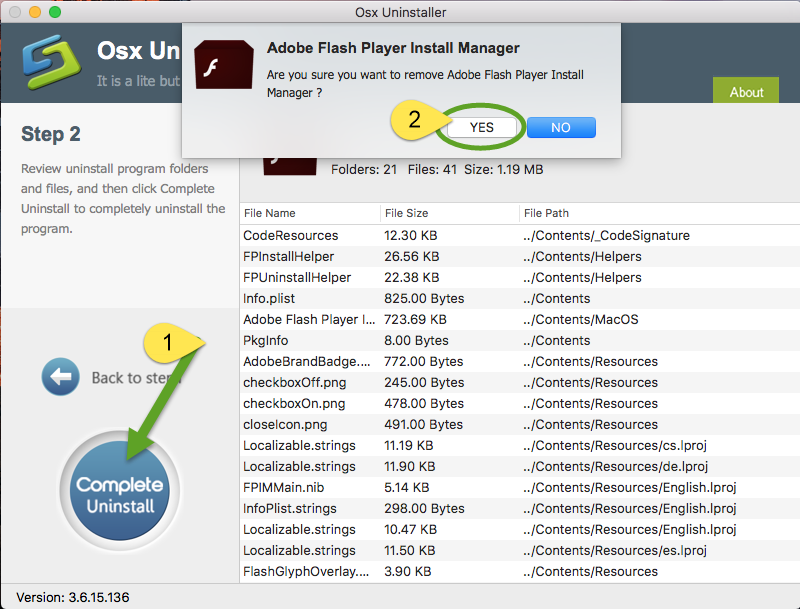
A similar process applies for Mac OS X users. This time, you’ll need to download the appropriate Flash Uninstaller from Adobe.
Locate the downloaded disk image (ending with “.dmg”) and double click on it. A new window should appear; simply double click on the “Adobe Flash Player Uninstaller.app” inside to get started.
You may receive a prompt asking you to confirm whether you’d like to open the application. Click “Open” to bring up the Uninstaller.
After being asked for your username and password, the uninstallation will take place.
You may receive a prompt asking you to confirm whether you’d like to open the application. Click “Open” to bring up the Uninstaller. After being asked for your username and password, the uninstallation will take place.
Uninstallation procedures vary if you’re using a Linux distribution. The most common commands are as follows:
- If you’re using a Chromium-based browser, run this at the command-line:
- If you’re using a Firefox-based browser, run this at the command-line:
Further reading:

3 minutes to read (394 words) ()
- Remove Adobe Flash Player From OS
- Linux Operating System
- Disable/Block Adobe Flash Player On Web Browsers
- Apple blocked Adobe Flash on 2010.
- Recently Mozilla Firefox block Adobe Flash Player.
- System76 Also removed Adobe Flash Player.
- Adobe Flash Player is also known for more security holes than Swiss cheese.
- Click Here to know all the Adobe Flash Player Security Holes.
- If you are thinking about security then first step is to removed Adobe Flash from your system.
Check Adobe Flash Player Is Installed On Your System
Remove Adobe Flash Player From OS
Microsoft Windows Operating System
- Download the Adobe Flash Player Uninstaller.
- Click Here For More Detailed Information About Uninstall Adobe Flash Player.
NOTE! The uninstaller does not work if any programs that use Flash are running on your computer.
Linux Operating System
Debian Based System Debian/Ubuntu/Mint
REDHAT Bases System RHEL/CentOS
- Click Here For More Detailed Information About Uninstall Adobe Flash Player.
How To Uninstall Adobe Flash Player
Apple MAC Operating System
- Download the Adobe Flash Player Uninstaller.
- Click Here For More Detailed Information About Uninstall Adobe Flash Player.
Disable/Block Adobe Flash Player On Web Browsers
Google Chrome
How To Uninstall Adobe Flash Player 30 Npapi
- Type
chrome:pluginsin the address bar to open the Plug-ins page. - Click
Disableunder Adobe Flash Player
Mozilla Firefox
- In Firefox, go to Tools, Add-ons and Plugins.
- Choose
Never activatefrom the drop-down menu on the Shockwave Flash plugin
Internet Explorer
- Are you kidding ?
- Uninstall IE and start using Better Web Browser.